



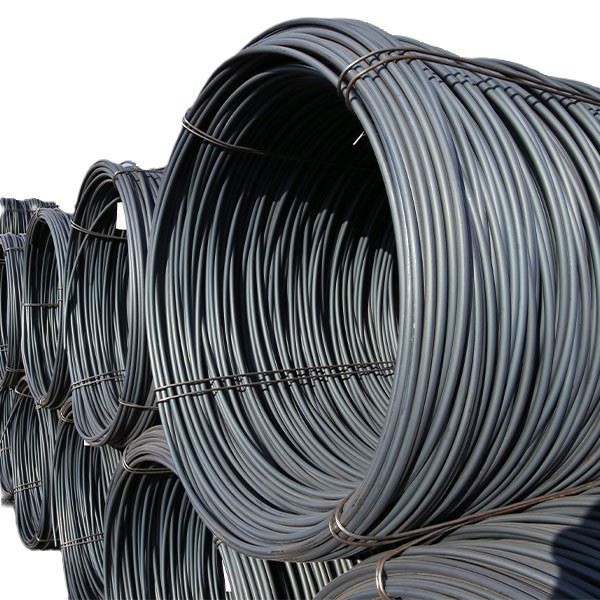
Wire Rod Coils Of Iron
Taiyuan Xinye Taiming Manufacturing and Processing Co., Ltd. is located in Taiyuan City, Shanxi Province, covering an area of 3000 square meters, with a number of advanced production lines, equipped with precision processing equipment and efficient production technology. Company existing staff of 50 people, including technical staff, production workers and management team, they experienced, skilled, can guarantee the stability of the production process and product quality and reliable.
1. Rich Experience
Taiyuan Xinye Taiming Manufacturing and Processing Co., Ltd. was established in October 2022. As a professional engaged in the pure iron processing and sales of enterprises, we are committed to providing customers with high quality pure iron products and excellent service.
2. Reliable Product Quality
The company has advanced production equipment and technical force, which can efficiently and accurately process all kinds of pure iron products. We not only provide standard specifications of pure iron products, but also can be customized according to the specific needs of customers to meet the individual requirements of different customers.
3. Professional Technical Team
Company existing staff of 50 people, including technical staff, production workers and management team, they experienced, skilled, can guarantee the stability of the production process and product quality and reliable.
4. Strong Production Capacity
Customer satisfaction is our eternal pursuit. We always adhere to the customer-centered service concept and strive to provide customers with high-quality products and excellent service. We have a specialized customer service department, responsible for handling customer inquiries, complaints and after-sales service, to ensure that customer problems can be solved in a timely and effective manner.
Pure iron wire rods, as a material choice for sensors, offer a unique set of advantages that make them desirable in various sensing applications. Their high magnetic permeability and low hysteresis loss make pure iron an excellent conductor of magnetic fields, a crucial characteristic for sensors that rely on magnetic interactions. In sensor technology, pure iron wire rods can be utilized to create highly sensitive magnetic sensors capable of detecting minute changes in magnetic fields. This property is particularly useful in industrial settings, where sensors need to monitor the presence or position of ferromagnetic objects, such as in automated manufacturing lines or assembly processes.
-
![Charge Grade Pure Iron Round Bar For Melting]()
-
![Parts Of Relay Forged Semi Finished Core]() Parts Of Relay Forged Semi Finished Core $ 1228.00
Parts Of Relay Forged Semi Finished Core $ 1228.00 -
![Pure Iron Wire Rod For Magnetic Cores]()
-
![Pure Iron Wire Rod for Precision Components]()
-
![High Purity Pure Iron Wire Rod For Melting Applications]()
-
![ELECTRICAL PURE IRON WIRES]()
-
![Soft Magnetic Pure Iron Wire Rod]()
-
![Electrolytic Iron]()
-
![Electromagnet High Purity Iron 99.5% Fe DT4C Pure Iron Rolled Rod Polished Round Iron Bar]()
-
![Chinese YT01 High Purity Iron Pure Iron Ferrous Non Alloy Steel Billets Remelting]()
-
![YT01 High Purity Steel Billets For Made Alloy Metal Hot Rolled]()
-
![Iron And Steel Re-meltable Scrap Billets]()


Advantages of Wire Rod Coils of Iron
High Purity and Excellent Electromagnetic Performance :The main chemical component of wire rod coils of iron is iron (Fe), with a content usually between 99.50% and 99.90%. The impurity element content is extremely low, which ensures its excellent physical and chemical properties. Iron wire coils have characteristics such as low coercivity (Hc), high permeability (μ), and high saturation magnetization (Bs), which make them perform well in electromagnetic devices. Their magnetic stability and lack of magnetic aging make them ideal for manufacturing electromagnetic devices such as electromagnets and relays.
Good Physical Properties: Compared to other metal materials, iron wire coils have a softer texture and higher toughness, which makes them easier to shape during processing and suitable for various complex shapes and sizes. Iron wire coils also have good ductility, meaning they can be stretched into fine filaments or pressed into thin sheets without breaking easily.
Corrosion Resistance: Wire rod coils of iron are less prone to rusting in humid air compared to ordinary iron, thanks to their high purity and dense metal structure. Additionally, in cold concentrated sulfuric acid, iron wire coils can undergo passivation, forming a dense oxide protective film that further improves their corrosion resistance.
Wide Range of Application Areas: Due to the advantages mentioned above, iron wire coils have a wide range of applications in multiple fields. For example, in industrial electromagnetic equipment, iron wire coils are used as core components in magnetic beneficiation machines, magnetic separators, and other equipment. In the field of electronic instruments and meters, iron wire coils are used to manufacture instruments such as magnetometers and flux meters. In medical equipment, iron wire coils are used in high-end devices such as magnetic resonance imaging machines.
Environmental Protection and Sustainability :Wire rod coils of iron, as a metal material, have good recyclability and reusability. Recycling and processing waste iron wire coils can reduce environmental pollution and resource waste, aligning with the concepts of environmental protection and sustainable development.
Application of Wire Rod Coils of Iron
Electromagnetic Equipment: Pure iron rods are widely used in the manufacturing of electromagnetic equipment due to their high magnetic permeability, low coercivity, and high saturation magnetization. Examples include electromagnets, transformer cores, and motor cores. These devices play a crucial role in industries such as power, electronics, and machinery.
Electronic Instruments and Meters: In the field of electronic instruments and meters, pure iron rods are used to manufacture instruments such as magnetometers, flux meters, and magnetic field testers. These instruments are essential in scientific research, education, industrial testing, and other applications.
Automotive Parts: Pure iron rods are used to manufacture automotive electrical or magnetic components, such as magnetic cores for generators and electric motors. With the continuous development of the automotive industry, the performance requirements for automotive components are increasing, and pure iron rods are favored due to their excellent properties.
Mechanical Components: Pure iron rods are also used to manufacture various mechanical components, including electrical or magnetic parts for machine tools. These components are critical for mechanical equipment, impacting performance and stability.
Special Applications: Pure iron rods have important applications in advanced national defense engineering, such as in the manufacture of precision instruments and missile components. These applications require materials with extremely high performance, and pure iron rods are preferred for their high purity and excellent physical properties.
Daily Necessities: Pure iron rods are widely used in civilian applications, such as in electromagnetic locks, solenoid valves, galvanized pots, and other everyday items. The use of pure iron rods enhances the durability and reliability of these products.
Medical Imaging: With advancements in medical technology, pure iron rods are increasingly used in medical imaging. For example, in MRI scanners, pure iron rods are part of the magnetic field source, providing a stable magnetic environment for imaging.
Superconducting Power Generation: In superconducting power generation, pure iron rods are used to manufacture supporting structures and shielding layers for superconducting materials. These components are critical for the performance and stability of superconducting power generation systems.
What Is the Electrical Resistivity of Pure Iron Wire Rod
The resistivity of pure iron wire rod is a physical property that describes the extent to which the material impedes the flow of electrical current. According to publicly available information, the resistivity of pure iron typically falls within a specific range, influenced by factors such as material purity, temperature, and measurement conditions.
Generally speaking, the resistivity of pure iron is approximately between 9.71×10−89.71 \times 10^{-8}9.71×10⁻⁸ Ω·m and 9.78×10−89.78 \times 10^{-8}9.78×10⁻⁸ Ω·m at room temperature (about 20°C). This range indicates that pure iron is a metal with good conductivity and relatively low electrical resistivity, which facilitates the transmission of current.
It is important to note that resistivity is a material property that is independent of its length, cross-sectional area, and other dimensions. However, in practical applications, the resistance of pure iron wire rods is also influenced by factors such as length, cross-sectional area, and the method of connection.
Additionally, with advances in science and technology and improvements in material preparation processes, the electrical resistivity of pure iron may experience slight variations. Therefore, in practical applications, it is advisable to determine the resistivity of pure iron wire rods based on specific material specifications and testing conditions.
The electrical resistivity of pure iron wire rods is a crucial parameter with significant implications for fields such as power transmission and electromagnetic conversion. In practical applications, it is essential to select appropriate pure iron wire rods according to specific requirements and ensure that their resistivity meets relevant standards and specifications.
Smelting and Preparation
Base Material Smelting: High-purity electromagnetic pure iron is obtained through the smelting process to ensure an extremely low impurity content.
Electrode Rod Preparation: When using electroslag remelting technology, the base material is processed into an electrode rod. This involves cutting the continuous casting billet and removing the surface oxide layer through acid washing.
Forming and Processing
Forging/Rolling: The electrode rod or base material is processed by forging or rolling to achieve the desired shape and size.
Rolling into Material: The material is further rolled to the required bar size.
Cold Extrusion Forming: For certain special shapes or requirements, cold extrusion forming technology is used. This process includes cutting, upsetting, annealing, lubrication treatment, and reverse extrusion forming to achieve precise dimensions and shapes.
Heat Treatment
Annealing Treatment: Annealing is a crucial step in processing electromagnetic pure iron bars. By controlling heating and cooling rates, as well as holding times, the material's crystal structure and magnetic properties are adjusted. This process can eliminate internal stress, improve magnetic permeability, and reduce coercivity.

Surface Treatment
Phosphating Treatment: To improve surface hardness and wear resistance, phosphating treatment can be applied. This forms a phosphating film that enhances anti-corrosion performance and coating quality.
Other Surface Treatments: Depending on specific requirements, additional surface treatments such as sandblasting and polishing may be carried out to enhance appearance and performance.
Cutting and Processing
Sawing: Use sawing machines to cut electromagnetic pure iron bars to the required length.
Drilling: For bars that require drilling, specialized equipment is used. During drilling, it is important to control cutting speed and feed rate to avoid material fracture or work hardening.
Precision Machining
Grinding: For high-precision surfaces, grinding removes small defects and unevenness, improving surface smoothness and dimensional accuracy.
Chamfering: Chamfering removes sharp edges and burrs, improving the material's appearance and safety during use.
Special Processing Methods
Wire EDM: For complex shapes or difficult-to-process materials, wire EDM technology is used. This method utilizes the heat generated by electric discharge to melt and cut the material.
Laser Cutting: Laser cutting is a non-contact method known for its high accuracy and speed. It is suitable for processing electromagnetic pure iron bars of various shapes and sizes.
Strength of Wire Rod Coils of Iron
The strength of pure iron wire rods is primarily reflected in their tensile strength, yield strength, and other mechanical properties. According to publicly available information, the mechanical properties of pure iron vary significantly depending on factors such as purity and grain size. Generally, the tensile strength of pure iron wire rods ranges from 176 to 274 MPa, while the yield strength ranges from 98 to 166 MPa. However, these values are not absolute, as different production processes and heat treatment conditions can lead to variations in the strength of pure iron wire rods.
Additionally, advancements in technology and material development may enhance the strength of certain pure iron wire rods. For example, high-strength fasteners made from deep-drawn pure iron can achieve a tensile strength of up to 340 ± 20 MPa. This enhanced strength is attained through specific production processes designed to meet the requirements of specialized applications.
Resilience of Wire Rod Coils of Iron
The resilience of pure iron wire rods refers to their ability to withstand impact and resist fracture. As a metallic material, pure iron typically exhibits good toughness. In pure iron wire rods, toughness is influenced by various factors, including grain size, impurity content, and heat treatment processes. Smaller grain sizes and lower impurity content generally enhance the toughness of pure iron wire rods. Additionally, appropriate heat treatment processes can further improve the toughness of pure iron coils, making them more suitable for use in complex and harsh environments.
In practical applications, the toughness of pure iron wire rods is crucial for ensuring their safety and reliability during use. For instance, in aerospace equipment, pure iron coils must endure extreme mechanical conditions and temperature changes. Therefore, they need to possess excellent toughness to prevent fracture or failure in challenging environments.
Ultimate FAQ Guide to Wire Rod Coils Of Iron
We're professional wire rod coils of iron suppliers in China, specialized in providing high quality eco-friendly iron products. We warmly welcome you to buy low-carbon wire rod coils of iron in stock here from our factory. For price consultation, contact us.
customized wire rod coils, wire rod coils with custom specifications, wire rod with custom specifications