


Iron Billets
Your Professional Iron Billets Supplier!
Xinye Taiming chooses the high-purity metal business, located in Taiyuan City, Shanxi Province, China. As a professional engaged in the pure iron processing and sales of enterprises, we are committed to providing customers with high quality pure iron products and excellent service.mainly manufactures and processes raw materials pure iron (smelting) and electromagnetic pure iron (precision instruments), and is committed to providing customers with high-quality customized processing and excellent services.
-
![Amrco Pure Iron Billet For Melting]()
-
![Pure Iron Billets For Melting]() Pure Iron Billets For Melting $ 800.00
Pure Iron Billets For Melting $ 800.00 -
![Pure Iron Billet For Melting]() Pure Iron Billet For Melting $ 800.00
Pure Iron Billet For Melting $ 800.00 -
![Charge Grade Pure Iron Billet For Melting]()
-
![High Purity Pure Iron Billet Manufacturer & Supplier]()
-
![High Purity Melting Iron (Fe ≥99%) Manufacturer | Factory Direct Supply]()
-
![Factory Direct High Purity Melting Iron Supplier]()
-
![High Purity Melting Iron For Alloy Manufacturing]()
-
![High Purity Melting Iron (Fe ≥99.0%) Manufacturer & Supplier]()
-
![Furnace Charge Pure Iron – High-Purity Iron Feedstock For Stable Melting Performance]()
-
![CUSTOM-SHAPE PURE IRON COMPONENTS]()
-
![PURE IRON FOR FURNACE CHARGE (INGOTS & BLOCKS)]()


Why Choose Us
Our Factory
Factory covering an area of 3000 square meters. It has multiple advanced production lines, precision processing equipment, and efficient production technology. The company currently has 308 employees, including technical personnel, production workers, and management teams.
Our Certifications
Our products meet stringent international standards (ISO 9001, RoHS). Trusted across 30+ countries, we combine cutting-edge innovation with sustainable practices to power your next breakthrough.
Quality Assurance
We strictly follow the standards of international quality management system for production and management to ensure that every batch of products leaving the factory has passed strict quality inspection. From the purchase of raw materials to each link in the production process, we implement strict quality control to ensure the stability and reliability of product quality.
Customer Service
Customer satisfaction is our eternal pursuit. We have a specialized customer service department, responsible for handling customer inquiries, complaints and after-sales service, to ensure that customer problems can be solved in a timely and effective manner.
Iron Billets - Overview
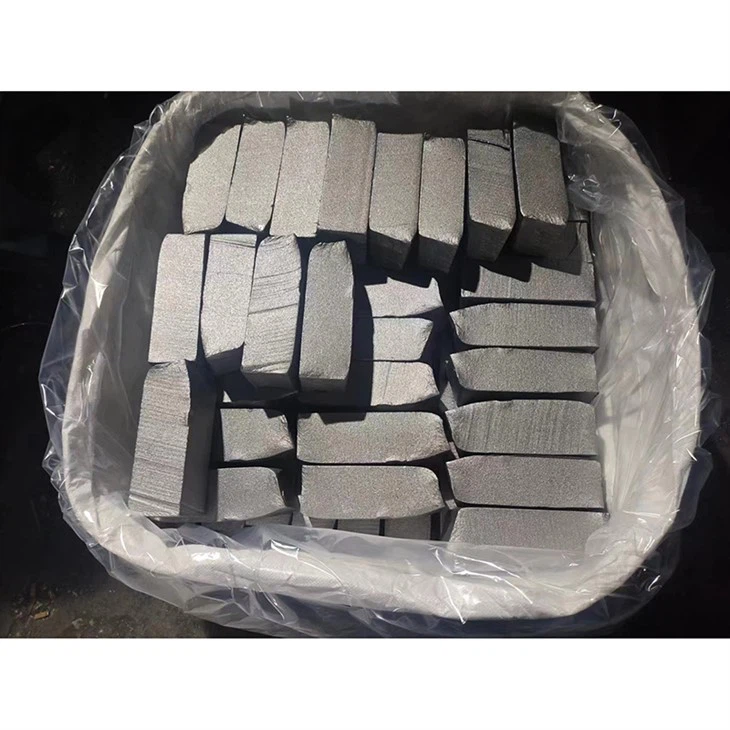
Iron billets are semi-finished metal products, typically with a square or round cross-section, used in various manufacturing processes. They are created through casting or hot working (like rolling or extrusion) and are further processed into items like bars, rods, and tubes.
Product Specification
We provide the following product specifications:
|
Property |
Value |
Industry Benchmark |
|
Material Standard |
ASTM A848, EN 10025, JIS G3101 |
ASTM A575 (Generic) |
|
Purity |
99.85% - 99.93% Fe |
99.5% - 99.8% Fe |
|
Density |
7.86 - 7.88 g/cm³ |
7.84 - 7.87 g/cm³ |
|
Melting Efficiency |
98.2% (Tested via 1,550°C Induction) |
94% - 96% |
|
Dimensions |
120x120x600mm (Standard) |
100x100x500mm (Typical) |
Advantages of Iron Billets
Versatility
Billets can be easily shaped, welded, and combined with other materials, allowing for the creation of a wide range of components and structures.
01
Machinability
They are relatively easy to machine into different shapes and sizes, allowing for precise manufacturing and customization.
02
Strength and Durability
Iron billets offer high strength and durability, making them suitable for demanding applications where structural integrity is crucial.
03
Cost-Effectiveness
In some cases, billets can be more cost-effective than other forms of iron, especially when considering the potential for material waste reduction.
04
Uniformity
The uniform composition of billets ensures consistent quality and performance, which is essential for many manufacturing processes.
05
Application
Skyscrapers
Today's skyscraper construction requires an iron billeted steel framework. There is a need for advanced construction materials that can cope with extreme conditions and severe forces.
Bridges And Hi-ways
Bridges and highways need to have steel reinforcements to make them endure high traffic along with other forces. Iron billets support the strength needed for such massive undertakings.
Expansion of The Industrial and Energetic Branch
Bangladesh's power plants, refineries, and other industrial units contain steel structures made of iron billets. The grade and strength guarantee reliability in energy and heavy-duty production.
Types and Size
|
Billet Specification |
Dimensions (mm) |
Industry Application |
Maximum Weight (tons) |
|
Square Billet |
150×150, 180×180, 240×240 |
Construction, Rebar, Wire Rod |
3–5 tons |
|
Rectangular Billet |
190×240, 250×300, 320×360 |
Heavy Equipment, Machinery |
8–10 tons |
|
Large Square Billet |
400×500 |
Wind Power, Marine Engineering |
10 tons |
|
Large Round Billet |
φ600–1300 |
Automotive, Offshore, Rail Transit |
Up to 60 tons |
Craftsmanship - Pig Iron and Steel Semis
Iron is produced in a blast (shaft) furnace, which is a vertical structure with refractory lining and steel shell up to 35 mm thick. The blast furnace process involves reducing iron (from iron ore) when it reacts with carbon oxide, hydrogen and solid carbon, which are released during fuel combustion in the furnace.
Iron ore materials, fuel (coke) and flux (limestone, burnt lime) are charged into the top of the blast furnace in the required quantity to produce hot metal; while air enriched with oxygen, natural gas, steam, etc, are blown into the bottom. Combustion takes place and the heated burden descends. As a result, hot metal containing 4.0-4.3% of carbon is produced.
The steelmaking process consists of such steps as charge material preparation, melting, secondary metallurgy and casting. Raw materials include hot metal or pig iron, scrap steel or iron, and ferroalloys. The most important is to remove excessive carbon, silicon, manganese and other impurities from the hot metal. Key steel production methods include basic oxygen, electric arc or open hearth furnaces.
The basic oxygen approach is now widely used to make steel in a basic oxygen furnace using hot metal. Charge materials include hot metal, scrap metal and mould powders (lime, fluorspar, iron ore and bauxite).
The electric arc furnace method is widely used to make high alloy, structural and special steels and alloys. Melting furnaces are classified into arc and induction types.
The open hearth furnace approach is used less and less due to its low production efficiency and environmental impact. The process takes place in the hearth of a reverberatory furnace.
Whichever route is used, the tapped steel is subject to ladle treatment to achieve the required chemistry and temperature. In doing so, steelmaking and casting become more cost-efficient. Units used for preheating, stirring and refining steel and adjusting chemical composition are called ladle furnaces.
Casting is the final step in steelmaking to produce solidified strands for further processing at hot-rolling mills. Nowadays, the main approach is continuous casting, which accounts for about 95% of all steel, while the remainder is teemed into ingots.
Continuous casting machines (casters) produce such semis as square billets or blooms for making sections and structural; slabs with rectangular cross-sections for manufacturing plates (sheets); round or hollow billets for pipe-making; and beam blanks for making wide flange beams. The solidified material from a caster can be fed directly to a hot-rolling mill, whereas ingots require further hot-rolling to be converted into semi-finished products.
Package & Delivery
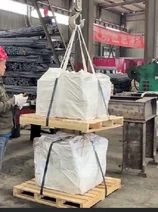
|
Container Type |
Loading Capacity |
Packaging Details |
Delivery Terms |
|
20ft Standard |
22-24 Tons |
Wooden pallets + VCI anti-rust film |
FOB Qingdao, CIF Global |
|
Bulk Vessel |
1,000+ Tons (Breakbulk) |
Sealed steel crates (ISO compliant) |
Negotiable |

FAQ
We're professional iron billets suppliers in China, specialized in providing high quality eco-friendly iron products. We warmly welcome you to buy low-carbon iron billets in stock here from our factory. For price consultation, contact us.
steel components billets, machining steel billets, sheet industry iron billets