



As a motor core supplier, I've witnessed firsthand the critical role that motor cores play in determining a motor's efficiency across different loads. In this blog, I'll delve into the intricate relationship between motor cores and motor efficiency, exploring how various factors associated with the core can impact performance under varying load conditions.
Understanding Motor Efficiency and Loads
Before we dive into the specifics of how motor cores affect efficiency, let's first clarify what motor efficiency and loads mean. Motor efficiency is defined as the ratio of the mechanical power output to the electrical power input. It's a measure of how well a motor converts electrical energy into mechanical energy. A higher efficiency means less energy is wasted as heat, which is not only beneficial for energy conservation but also for the motor's longevity.
Loads, on the other hand, refer to the amount of work a motor is required to perform. Motors can operate under different load conditions, including no - load, partial - load, and full - load. No - load condition occurs when the motor is running without any external mechanical load attached. Partial - load is when the motor is operating at less than its rated capacity, and full - load is when it's working at its maximum designed capacity.
Core Material and Its Impact on Efficiency
The material of the motor core is one of the most significant factors affecting motor efficiency at different loads. The most commonly used materials for motor cores are silicon steel, ferrite, and amorphous metals.
Silicon steel is a popular choice due to its relatively low cost and good magnetic properties. It has high magnetic permeability, which means it can easily conduct magnetic flux. At low loads, silicon steel cores can provide decent efficiency because they have relatively low eddy current losses. Eddy currents are circulating currents induced within the core material by the changing magnetic field. These currents cause power losses in the form of heat. However, at high loads, the eddy current losses in silicon steel cores can increase significantly, reducing the overall efficiency of the motor.
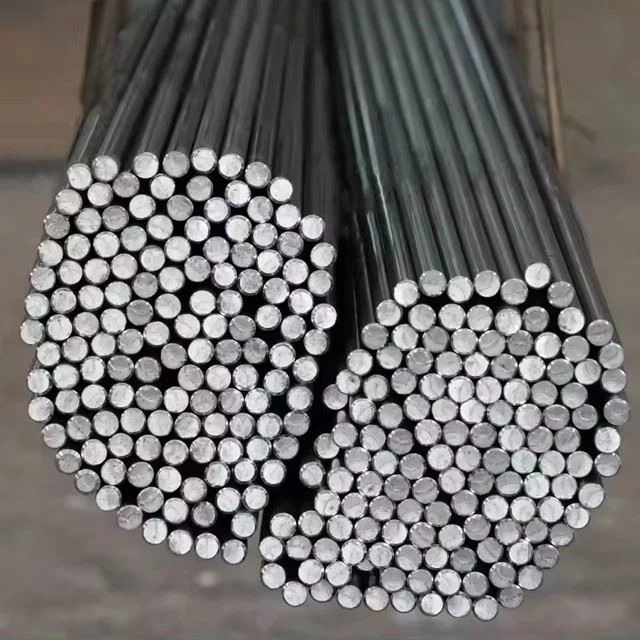
Ferrite cores have very high electrical resistivity, which makes them excellent at reducing eddy current losses. They are often used in high - frequency applications. At low loads, ferrite cores can offer high efficiency because of their low power losses. But ferrite has a lower saturation flux density compared to silicon steel. This means that at high loads, when the magnetic field strength increases, ferrite cores may saturate more easily, leading to a decrease in efficiency. You can find high - quality iron rods for electromagnets, which can be used in motor cores, at Electromagnet Core Iron Rods.
Amorphous metals are a newer type of core material. They have extremely low core losses compared to silicon steel and ferrite. At both low and high loads, amorphous metal cores can provide high efficiency. Their unique atomic structure gives them excellent magnetic properties and low eddy current losses. However, they are more expensive than silicon steel, which limits their widespread use.
Core Design and Efficiency
The design of the motor core also plays a crucial role in determining efficiency at different loads. One important design aspect is the core shape. Different core shapes, such as E - cores, C - cores, and toroidal cores, have different magnetic characteristics.
E - cores are widely used in motors because they are easy to manufacture and assemble. They can provide good magnetic coupling between the windings. At low loads, E - cores can offer reasonable efficiency. But at high loads, the magnetic flux distribution in E - cores may not be as uniform as in other shapes, which can lead to increased losses and reduced efficiency.
Toroidal cores, on the other hand, have a more uniform magnetic field distribution. This results in lower eddy current losses and higher efficiency, especially at high loads. However, toroidal cores are more difficult and expensive to manufacture, which can increase the overall cost of the motor.
Another design factor is the core laminations. Laminations are thin sheets of the core material stacked together. The purpose of laminations is to reduce eddy current losses. By separating the core into thin layers, the path of the eddy currents is restricted, thereby reducing the losses. At all load levels, motors with well - designed laminated cores tend to have higher efficiency compared to those with solid cores.
Impact of Core Size on Efficiency
The size of the motor core also affects its efficiency at different loads. A larger core generally has a higher magnetic flux - carrying capacity. At high loads, a larger core can handle the increased magnetic field without saturating as easily as a smaller core. This means that the motor can operate more efficiently at full - load conditions.
However, at low loads, a larger core may lead to increased core losses because there is more material to be magnetized and demagnetized. The extra material also adds to the weight and cost of the motor. So, it's important to choose the right core size based on the expected load profile of the motor.
How Motor Cores Affect Efficiency at Different Loads
At no - load, the motor core mainly experiences core losses due to hysteresis and eddy currents. Hysteresis loss is the energy lost as the magnetic domains in the core material are repeatedly realigned by the changing magnetic field. A core material with low hysteresis loss, such as high - grade silicon steel or amorphous metal, can improve the efficiency of the motor at no - load.
At partial - load, the motor core needs to balance between providing enough magnetic flux to drive the load and minimizing losses. The core material and design play a crucial role here. For example, a motor with a well - laminated silicon steel core can maintain relatively high efficiency at partial - loads because the laminations reduce eddy current losses, and the silicon steel provides good magnetic properties.

At full - load, the motor core is under the most stress. It needs to handle the maximum magnetic flux without saturating and causing excessive losses. Amorphous metal cores or well - designed large - sized silicon steel cores are more suitable for full - load applications. They can ensure high efficiency by minimizing both eddy current and hysteresis losses.
Applications and Considerations
In different applications, the requirements for motor efficiency at different loads vary. For example, in aerospace applications, where weight and efficiency are critical, Aerospace Engine Iron Rods made from high - performance materials may be used. These materials can provide high efficiency at different load conditions while keeping the weight of the motor to a minimum.
In industrial applications, motors often operate at partial - loads for a significant amount of time. So, choosing a motor core that offers high efficiency at partial - loads can lead to substantial energy savings over time. Materials like silicon steel with proper lamination design can be a cost - effective solution for these applications.
In consumer electronics, where space and cost are important factors, ferrite cores may be preferred for their low eddy current losses and compact size. They can provide good efficiency at low loads, which is typical for most consumer electronic devices.
Conclusion
As a motor core supplier, I understand the importance of providing the right core solutions to meet the efficiency requirements of different motors at various loads. The motor core's material, design, and size all have a significant impact on the motor's efficiency. By carefully considering these factors, we can help our customers select the most suitable motor cores for their specific applications.
If you're in the market for high - quality motor cores or need more information about how motor cores can affect your motor's efficiency, please don't hesitate to contact us. We're here to assist you in making the best choice for your needs. Whether you're looking for Metals Iron Steel for your industrial motors or specialized materials for aerospace applications, we have the expertise and products to meet your requirements.
References
- Chapman, S. J. (2012). Electric Machinery Fundamentals. McGraw - Hill Education.
- Slemon, G. R. (1992). Electric Machines and Drives. Addison - Wesley Publishing Company.
- Nasar, S. A., & Boldea, I. (1997). Electric Machines and Drives: A First Course. Prentice Hall.