


Hey there! As a supplier of Cold Rolled Steel (CRS), I've seen firsthand the numerous benefits that this material brings to the table. In this blog post, I'm gonna break down these advantages and explain why CRS might just be the perfect choice for your next project.
1. Superior Surface Finish
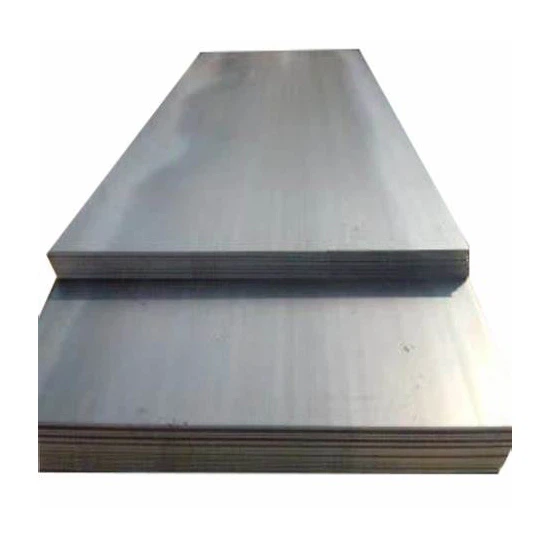
One of the most noticeable benefits of CRS is its excellent surface finish. Unlike Hot Rolled Iron Sheet, which often has a scaly and rough surface due to the high - temperature rolling process, CRS is cold - rolled after the initial hot - rolling stage. This cold - rolling process gives it a smooth, shiny, and consistent surface.
For applications where appearance matters, like automotive body panels, appliances, or decorative items, CRS is a no - brainer. You won't have to spend extra time and money on additional surface treatments to achieve a good look. It's already got that sleek finish right out of the mill. This not only saves on costs but also speeds up the production process.
2. Tight Dimensional Tolerances
When it comes to precision, CRS is a champ. Cold rolling allows for much tighter dimensional tolerances compared to hot rolling. This means that the thickness, width, and length of CRS products are more consistent from piece to piece.
In industries such as aerospace and electronics, where even the slightest deviation can lead to serious problems, CRS is the material of choice. Components made from CRS can be fabricated with high precision, ensuring a perfect fit and optimal performance. Whether you're making small electronic enclosures or large - scale structural parts, you can count on CRS to meet your exact specifications.
3. Enhanced Mechanical Properties
CRS offers improved mechanical properties in several ways. Firstly, it has higher strength and hardness compared to hot - rolled steel. This is because the cold - rolling process work - hardens the steel, increasing its resistance to deformation.
For applications that require high strength, like machinery parts and construction components, CRS provides the necessary durability. It can withstand heavy loads and stresses without losing its shape or integrity. Additionally, CRS has better ductility than some other high - strength materials. This means it can be bent, formed, and shaped into various complex geometries without cracking or breaking. So, if you need to create intricate designs, CRS gives you the flexibility to do so.
4. Improved Weldability
Welding is a common manufacturing process, and CRS is very weld - friendly. Its uniform composition and fine - grained structure make it easier to weld compared to some other types of steel. When you weld CRS, you're less likely to encounter issues such as porosity, cracking, or poor fusion.
This is a huge advantage for fabricators and manufacturers. They can achieve strong and reliable welds, which is crucial for the structural integrity of the final product. Whether you're using arc welding, MIG welding, or TIG welding, CRS will give you consistent results. This reduces the need for rework and ensures a high - quality end product.
5. Corrosion Resistance
While CRS isn't as corrosion - resistant as stainless steel, it still offers better corrosion resistance than hot - rolled steel. The smooth surface of CRS makes it less prone to rust and corrosion. Additionally, it can be easily coated or painted to further enhance its corrosion resistance.
For outdoor applications or environments where moisture is present, a simple paint or coating can protect CRS from rusting for a long time. This extends the lifespan of the products made from CRS and reduces maintenance costs. Whether it's a fence, a storage shed, or a piece of outdoor equipment, CRS can stand up to the elements with the right protection.

6. Cost - Effectiveness
When you consider all the benefits mentioned above, CRS is actually a very cost - effective option. Yes, it might be a bit more expensive than hot - rolled steel upfront, but the savings in terms of reduced processing time, fewer rejects, and lower maintenance costs over the product's lifespan can be significant.
The tight dimensional tolerances mean less material waste during fabrication. The superior surface finish reduces the need for additional finishing operations. And the enhanced mechanical properties and weldability lead to fewer production issues and higher - quality products. All these factors add up to long - term cost savings for manufacturers and end - users alike.
7. Wide Range of Applications
CRS has a vast range of applications across different industries. In the automotive industry, it's used for body panels, frames, and engine components. In the construction industry, it's used for roofing, siding, and structural supports. In the electronics industry, it's used for enclosures, brackets, and connectors.
The versatility of CRS makes it a valuable material for many businesses. No matter what your industry or application is, there's a good chance that CRS can meet your needs. And as a CRS supplier, I can provide you with the right type and grade of CRS for your specific project.
Contact Us for Your CRS Needs
If you're interested in learning more about how CRS can benefit your project or if you're ready to place an order, don't hesitate to get in touch. We're here to help you make the best choice for your business. Whether you need a small quantity for a prototype or a large - scale production run, we've got you covered.
In conclusion, CRS offers a wide range of benefits that make it a top choice for many applications. From its superior surface finish and tight dimensional tolerances to its enhanced mechanical properties and cost - effectiveness, CRS is a material that delivers. So, if you're looking for a high - quality steel product, give CRS a try.
References
- "Steel: Processing, Structure, and Performance" by George Krauss
- "The Manufacturing Engineering Handbook" by Myer Kutz