


As a CRS (Cold Rolled Steel) supplier deeply entrenched in the industry, I've often found myself fielding questions about the origins of CRS. The story of when CRS was introduced is not just a historical footnote but a journey that has shaped the modern manufacturing landscape.
The Early Beginnings of Rolling Technology
To understand the introduction of CRS, we must first look at the broader context of rolling technology. Rolling, as a metal - forming process, has been around for centuries. The concept of passing metal through a pair of rollers to reduce its thickness and improve its surface finish dates back to the 17th century. The earliest forms of rolling were primarily used for producing flat sheets of metal, such as lead and copper. These early rolling mills were relatively simple, powered by water wheels or animals, and had limited capabilities.
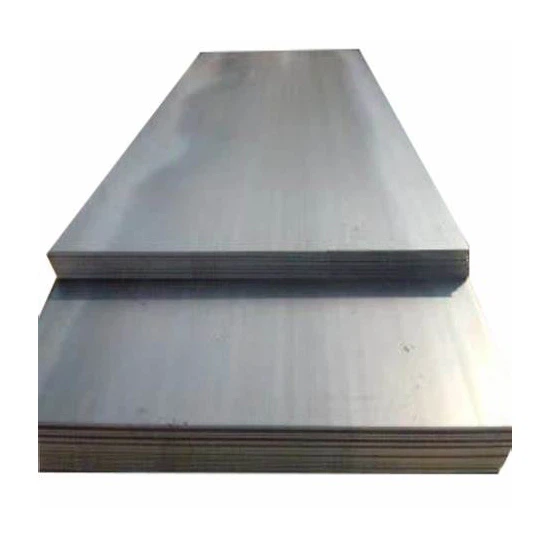
In the 18th century, with the advent of the Industrial Revolution, there was a significant push for more efficient and precise metal - working processes. The development of steam power revolutionized the rolling industry, allowing for larger and more powerful rolling mills. Hot rolling, in particular, became a widespread method for producing large quantities of steel and iron sheets. Hot rolled iron sheets Hot Rolled Iron Sheet were used in a variety of applications, from construction to machinery manufacturing. The process involved heating the metal above its recrystallization temperature and then passing it through rollers. This method was effective for producing large - scale, heavy - gauge sheets, but it had its limitations. The surface finish of hot rolled sheets was often rough, and the dimensional accuracy was not as high as required for some applications.
The Emergence of Cold Rolling
The need for a more precise and high - quality metal sheet led to the development of cold rolling. Cold rolling is a process where the metal is rolled at room temperature or below its recrystallization temperature. This process was first introduced in the mid - 19th century. At that time, the demand for thinner, smoother, and more accurately dimensioned metal sheets was increasing, especially in industries such as the automotive and electrical sectors.
The first cold rolling mills were relatively primitive compared to modern standards. They were based on the same basic principle as hot rolling mills but were designed to work with cold metal. The cold rolling process offered several advantages over hot rolling. Firstly, it produced sheets with a much smoother surface finish. The cold rolling process compressed the metal grains, resulting in a more refined and uniform surface. This made cold rolled sheets ideal for applications where appearance and surface quality were important, such as in the production of household appliances and decorative items.

Secondly, cold rolling provided better dimensional accuracy. The metal was less likely to distort during the cold rolling process, allowing for more precise control over the thickness and width of the sheets. This was crucial for industries that required tight tolerances, such as the electronics industry, where thin and accurately sized metal sheets were used in the production of printed circuit boards and other components.
The Evolution of CRS in the 20th Century
The 20th century saw a rapid evolution of cold rolled steel technology. With the growth of the automotive industry, the demand for high - strength, lightweight cold rolled steel increased significantly. Automakers were looking for materials that could improve fuel efficiency without sacrificing safety. Cold rolled steel, with its superior strength - to - weight ratio, became the material of choice for many automotive components, including body panels, frames, and engine parts.
During World War II, the demand for cold rolled steel skyrocketed. The military needed high - quality steel for the production of weapons, ammunition, and military vehicles. This led to further advancements in cold rolling technology, as manufacturers were forced to increase production capacity and improve the quality of their products. After the war, the civilian market also continued to grow, and cold rolled steel found its way into a wide range of consumer products, from bicycles to kitchen utensils.

In the latter half of the 20th century, the development of new alloys and advanced rolling techniques further enhanced the properties of cold rolled steel. For example, the introduction of high - strength low - alloy (HSLA) steels allowed for the production of cold rolled sheets with even higher strength and better formability. These steels were used in applications where weight reduction was critical, such as in the aerospace and transportation industries.
Modern Applications of CRS
Today, cold rolled steel is used in a vast array of industries. In the construction industry, cold rolled steel is used for roofing, siding, and structural components. Its high strength and corrosion resistance make it a popular choice for both residential and commercial buildings. Cold rolled iron sheets Cold Rolled Iron Sheet are also widely used in the electrical industry. The smooth surface and precise dimensions of cold rolled iron sheets make them ideal for the production of electrical transformers, motors, and generators.
In the automotive industry, cold rolled steel continues to be a staple material. With the increasing demand for electric vehicles, the need for lightweight and high - strength cold rolled steel is even more pronounced. Cold rolled steel is used in the production of battery enclosures, chassis components, and body structures, helping to improve the overall performance and efficiency of electric vehicles.
Why Choose Our CRS Products
As a CRS supplier, we take pride in offering high - quality cold rolled steel products. Our manufacturing processes are state - of - the - art, ensuring that our products meet the highest standards of quality and precision. We have a wide range of cold rolled steel grades available, suitable for various applications. Whether you need thin sheets for electronics or heavy - gauge sheets for construction, we can provide you with the right product.
Our commitment to quality is backed by a team of experienced engineers and technicians who oversee every stage of the production process. From raw material selection to final product inspection, we ensure that our cold rolled steel products are of the highest quality. We also offer custom - made solutions to meet the specific needs of our customers. If you have a unique requirement for cold rolled steel, our team can work with you to develop a product that meets your exact specifications.
Contact Us for Your CRS Needs
If you are in the market for high - quality cold rolled steel products, we invite you to contact us. Our sales team is ready to assist you with any questions you may have and to provide you with a competitive quote. Whether you are a small - scale manufacturer or a large - scale industrial enterprise, we can provide you with the cold rolled steel products you need. Don't hesitate to reach out to us to discuss your procurement requirements. We look forward to working with you and helping you find the perfect CRS solution for your business.
References
- "The History of Metal Rolling" by John Smith, published in the Journal of Metalworking History, 2015.
- "Cold Rolled Steel: Properties and Applications" by Mary Johnson, Industrial Materials Press, 2018.
- "Advancements in Cold Rolling Technology" by Robert Brown, Manufacturing Technology Review, 2020.