



The density of solid iron is a fundamental property that plays a crucial role in various industries, from construction to manufacturing. As a supplier of solid iron, understanding this property is essential for providing high - quality products and meeting the diverse needs of our customers.
Understanding the Concept of Density
Density is defined as the mass per unit volume of a substance. Mathematically, it is expressed as ( \rho=\frac{m}{V}), where ( \rho) represents density, (m) is mass, and (V) is volume. In the case of solid iron, density gives us an idea of how much mass is packed into a given volume of the material.
Density of Pure Solid Iron
Pure solid iron, also known as Iron, Pure, has a well - defined density under standard conditions. At room temperature (approximately 20°C or 293K) and standard atmospheric pressure (1 atm), the density of pure iron is about 7.874 g/cm³. This value can vary slightly depending on factors such as the crystal structure of the iron.
Iron can exist in different crystal structures, namely ferrite (body - centered cubic, BCC), austenite (face - centered cubic, FCC), and others. Ferrite is stable at lower temperatures, and austenite is stable at higher temperatures. The density of ferrite is around 7.86 g/cm³, while the density of austenite is approximately 7.9 g/cm³. These differences in density are due to the different arrangements of iron atoms in the crystal lattice.
Factors Affecting the Density of Solid Iron
- Alloying Elements: When iron is alloyed with other elements, the density can change significantly. For example, adding elements like nickel, chromium, or manganese can either increase or decrease the density depending on the atomic mass and the way these elements fit into the iron lattice. Stainless steel, which is an alloy of iron with chromium and sometimes nickel, has a density that can range from about 7.75 to 8.05 g/cm³, depending on the exact composition.
- Temperature: As the temperature of solid iron increases, the atoms gain more kinetic energy and vibrate more vigorously. This causes the iron to expand, and as a result, the volume increases while the mass remains the same. According to the density formula ( \rho=\frac{m}{V}), an increase in volume leads to a decrease in density. For instance, when iron is heated from room temperature to a high - temperature state, the density will gradually decrease.
- Porosity: If the solid iron has pores or voids, the effective volume occupied by the iron material increases, leading to a lower density. Porosity can be introduced during the manufacturing process, such as in casting or powder metallurgy. For example, in some sintered iron parts, the presence of small pores can reduce the density to values lower than that of pure, dense iron.
Importance of Knowing the Density of Solid Iron in Different Industries
- Engineering and Construction: In engineering and construction, knowing the density of iron is crucial for structural design. Engineers need to calculate the weight of iron components accurately to ensure the stability and safety of buildings, bridges, and other structures. For example, when designing a steel - framed building, the density of the iron - based steel is used to calculate the load - bearing capacity of the columns and beams.
- Manufacturing: In the manufacturing industry, density is important for quality control. By measuring the density of iron products, manufacturers can detect defects such as porosity or improper alloying. In the production of iron castings, for example, a deviation from the expected density may indicate a problem in the casting process, such as the presence of gas bubbles or an incorrect chemical composition.
- Transportation: In the transportation sector, the density of iron affects the weight of vehicles and equipment. For railway tracks, which are made of steel (an iron - based alloy), the density influences the overall weight of the track system. In the automotive industry, the density of iron parts affects the fuel efficiency of vehicles. Lighter iron - based components can reduce the overall weight of the vehicle, leading to lower energy consumption.
Our Offerings as a Solid Iron Supplier
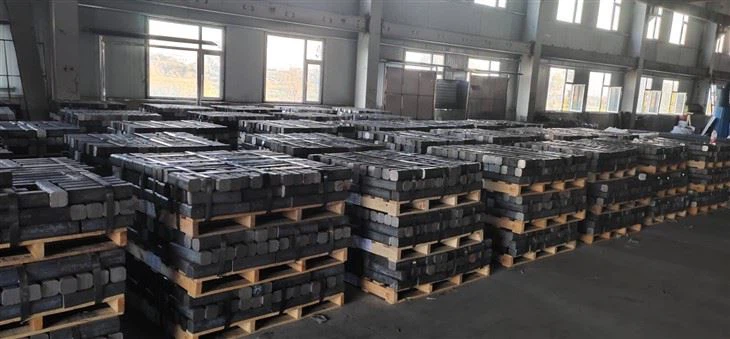
As a solid iron supplier, we understand the importance of providing high - quality products with well - defined density characteristics. We offer a wide range of solid iron products, including Soft Iron and PURE IRON FOR FURNACE CHARGE (INGOTS & BLOCKS).
Our soft iron products are carefully manufactured to have a consistent density close to that of pure iron. We use advanced production techniques to minimize porosity and ensure uniform alloying in case of alloyed iron products. Our pure iron for furnace charge is of high purity, and we provide detailed information about its density and other physical properties to our customers.
We also offer customized solutions based on the specific requirements of our customers. Whether you need iron with a specific density for a particular application or an alloy with a unique combination of properties, our team of experts can work with you to develop the right product.

Applications of Our Solid Iron Products
- Electrical Industry: Soft iron is widely used in the electrical industry due to its high magnetic permeability and relatively low coercivity. It is used in transformers, inductors, and magnetic cores. Our soft iron products, with their well - controlled density and magnetic properties, are ideal for these applications.
- Furnace Operations: Our PURE IRON FOR FURNACE CHARGE (INGOTS & BLOCKS) is essential for furnace operations. The known density of the iron allows for accurate calculation of the amount of material needed for a particular furnace charge, ensuring efficient melting and processing.
Contact Us for Your Solid Iron Needs
If you are in the market for high - quality solid iron products, we invite you to contact us. Whether you are an engineer, a manufacturer, or involved in any industry that requires iron materials, our team is ready to assist you. We can provide samples, detailed product specifications, and competitive pricing. Let's start a conversation about how our solid iron products can meet your specific requirements.
References
- Callister, W. D., & Rethwisch, D. G. (2011). Materials Science and Engineering: An Introduction. Wiley.
- ASM Handbook, Volume 1: Properties and Selection: Irons, Steels, and High - Performance Alloys. ASM International.