


Hey there! As a supplier of iron billets, I often get asked about the dielectric properties of these nifty little pieces of metal. So, I thought I'd take a moment to break it down for you in a way that's easy to understand.
First off, let's talk about what dielectric properties are. In simple terms, dielectric properties refer to how a material responds to an electric field. When an electric field is applied to a material, the charges within the material can either move freely or get polarized. Dielectric materials are those that can be polarized, meaning the positive and negative charges within the material separate slightly in response to the electric field.
Now, when it comes to iron billets, things get a bit more complicated. Iron is a conductor, which means it allows electric charges to move freely through it. Unlike dielectric materials, conductors don't really get polarized in the same way. Instead, when an electric field is applied to an iron billet, the free electrons within the iron move to counteract the field. This results in the formation of an opposing electric field inside the iron, effectively canceling out the external field.
However, that doesn't mean iron billets don't have any dielectric - related properties at all. At high frequencies, the behavior of iron changes a bit. At these frequencies, the skin effect comes into play. The skin effect causes the electric current to flow more on the surface of the conductor rather than through the entire cross - section. This can be thought of as a kind of a pseudo - dielectric behavior in a way, because the current distribution becomes non - uniform due to the interaction with the alternating electric field.
Another aspect to consider is the presence of impurities or coatings on the iron billet. Impurities can change the electrical conductivity of the iron, which in turn can affect its response to an electric field. For example, if there are certain non - metallic impurities in the iron billet, they might act as dielectric inclusions. These inclusions can cause local polarization and affect the overall dielectric - like behavior of the billet.
Coatings on the iron billet can also have a significant impact. For instance, if the billet is coated with a dielectric material, the combination of the conductive iron core and the dielectric coating will have unique dielectric properties. The coating can act as a barrier that affects how the electric field penetrates the iron, leading to different electrical responses.
Now, I know you might be wondering why all this matters. Well, understanding the dielectric properties of iron billets is crucial in many industrial applications. In the field of electromagnetic heating, for example, the way an iron billet responds to an alternating electric field determines how efficiently it can be heated. By knowing its dielectric characteristics, we can optimize the heating process and reduce energy consumption.
In induction melting, the dielectric - related behavior of iron billets affects how well they can couple with the induction field. A better understanding of these properties allows us to design more effective melting systems, which can save both time and money.
As a supplier, I'm always on the lookout for the best iron billets in the market. I've got a great selection of products that are not only high - quality but also have the right electrical properties for various applications. For example, you can check out our Furnace - Grade Pure Iron Ingots With High Purity. These ingots are made with a high level of purity, which means they have consistent electrical conductivity and can perform well in different industrial processes.
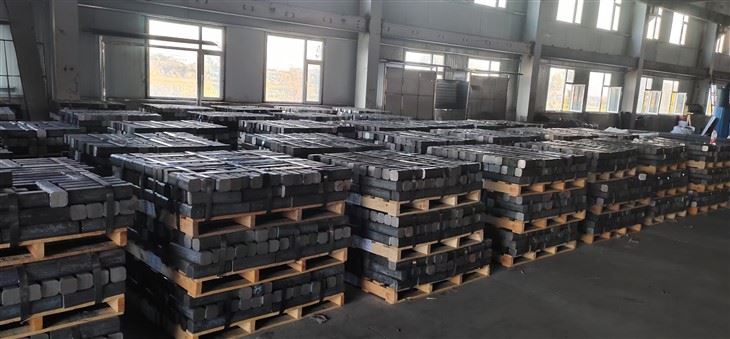

Another great option is our Meltbase Iron Billet. This billet is designed to be a reliable base material for melting operations. Its dielectric - like behavior at high frequencies makes it ideal for efficient induction melting.
And if you're looking for pure iron, we've got you covered with our Iron, Pure. This product has minimal impurities, which gives it predictable electrical properties and makes it suitable for applications where precise control of electrical behavior is required.
If you're in the market for iron billets and want to learn more about how their dielectric properties can benefit your specific application, don't hesitate to reach out. Whether you're involved in the manufacturing of electrical components, metal casting, or any other industry that uses iron billets, I'm here to help you find the perfect product for your needs. We can have a chat about your requirements, and I can provide more detailed information on how our products can meet them. So, let's start a conversation and see how we can work together to get you the best iron billets for your projects.
References
- "Electromagnetic Fields and Waves" by John D. Kraus
- "Industrial Applications of Electromagnetic Fields" by David C. Jiles