


Hey there! I'm a supplier of Ultra-Low Carbon (ULC) Steel, and today I wanna have a chat about what the cost of ULC Steel looks like when you stack it up against other steels.
Let's start by getting a basic understanding of ULC Steel. It's a type of steel with an extremely low carbon content, usually less than 0.01%. This low carbon content gives it some unique properties. For example, it's super ductile and formable, which makes it a top choice in industries like automotive manufacturing, where complex shapes need to be stamped out of the steel.
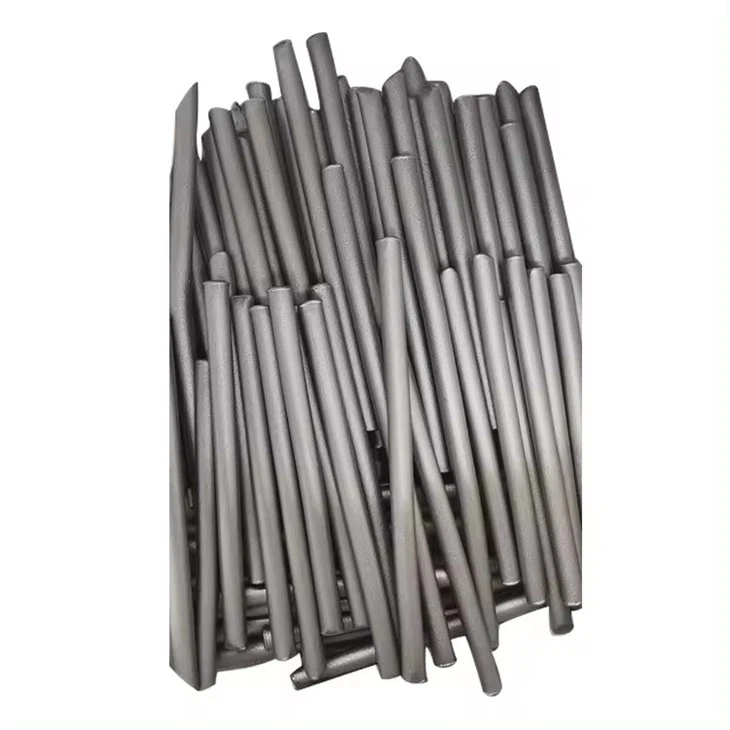
Now, when it comes to cost, there are a bunch of factors that come into play. First off, the raw materials. Making ULC Steel requires some pretty high - quality stuff. To get that ultra - low carbon level, special processes and materials are needed. We often use things like Electric Arc Furnace Pure Iron Rods and High Purity Iron Metal Pure Iron Rods. These materials are more expensive than the ones used for regular steels. Regular steels can use a wider range of scrap metals and iron ores that are more readily available and cheaper.
The production process for ULC Steel is also a big cost factor. It's a more complex and precise process compared to making regular steels. The refining process has to be carefully controlled to keep that carbon content down. Special equipment and techniques are required, like vacuum degassing. This adds to the production cost because it takes more time, energy, and expertise. For instance, the Soft Magnetic Iron Bars Via VIM Melting Process are made through a precise melting process that ensures high purity, which is crucial for ULC Steel production but also drives up the cost.

In comparison, let's take a look at carbon steels. Carbon steels are the most common type of steel out there. They have a higher carbon content, usually ranging from 0.05% to 2.0%. The raw materials for carbon steels are easier to source. You can use a lot of recycled scrap metal, which is much cheaper. And the production process is less complex. There's no need for the super - precise control of carbon content like in ULC Steel. So, generally speaking, the cost of producing carbon steels is lower than that of ULC Steel.
Stainless steels are another type of steel to consider. Stainless steels contain chromium, which gives them their corrosion - resistant properties. The cost of stainless steel is mainly driven by the price of chromium and other alloying elements. While the production process for stainless steel is also complex, it's a different kind of complexity compared to ULC Steel. The cost of stainless steel can vary widely depending on the grade and the amount of alloying elements. In some cases, high - end stainless steels can be more expensive than ULC Steel, but in other cases, standard stainless steels might be in a similar price range or even cheaper than ULC Steel, especially if the market price of chromium is low.
When it comes to the market price, ULC Steel usually commands a premium. The industries that use ULC Steel, like automotive and electronics, are willing to pay more for its unique properties. In the automotive industry, ULC Steel's high formability allows for the creation of lighter and more fuel - efficient car parts. And in the electronics industry, its magnetic properties are valuable for certain components. So, even though the production cost is higher, the end - users are often willing to pay more because they can get better performance from ULC Steel.
However, the cost difference between ULC Steel and other steels isn't always a deal - breaker. In some applications, the benefits of ULC Steel far outweigh the extra cost. For example, if a car manufacturer can use ULC Steel to make a car part that is lighter and stronger, it can lead to better fuel efficiency and safety. This can result in long - term savings and a competitive edge in the market.
On the other hand, in applications where the properties of ULC Steel aren't really necessary, using regular steels is a more cost - effective choice. For example, in construction projects where basic structural support is needed, carbon steels can do the job just fine at a lower cost.
As a ULC Steel supplier, I understand that cost is a major concern for my customers. That's why I'm always working on ways to optimize the production process and reduce costs without sacrificing quality. We're constantly looking for more efficient ways to use raw materials and improve the refining process.
If you're in an industry that could benefit from the unique properties of ULC Steel, I'd love to have a chat with you. Whether you're in automotive, electronics, or any other field where high - performance steel is needed, we can discuss your specific requirements and see how we can meet them at a competitive price. Don't hesitate to reach out for a detailed quote and to start a procurement discussion.
References
- ASM Handbook, Volume 1: Properties and Selection: Irons, Steels, and High - Performance Alloys
- Steel Industry Annual Report, various years